The Sun Clocks Out Early Now: Your Fall Guide to Vitamin D
The Brazen Team · October 19, 2026
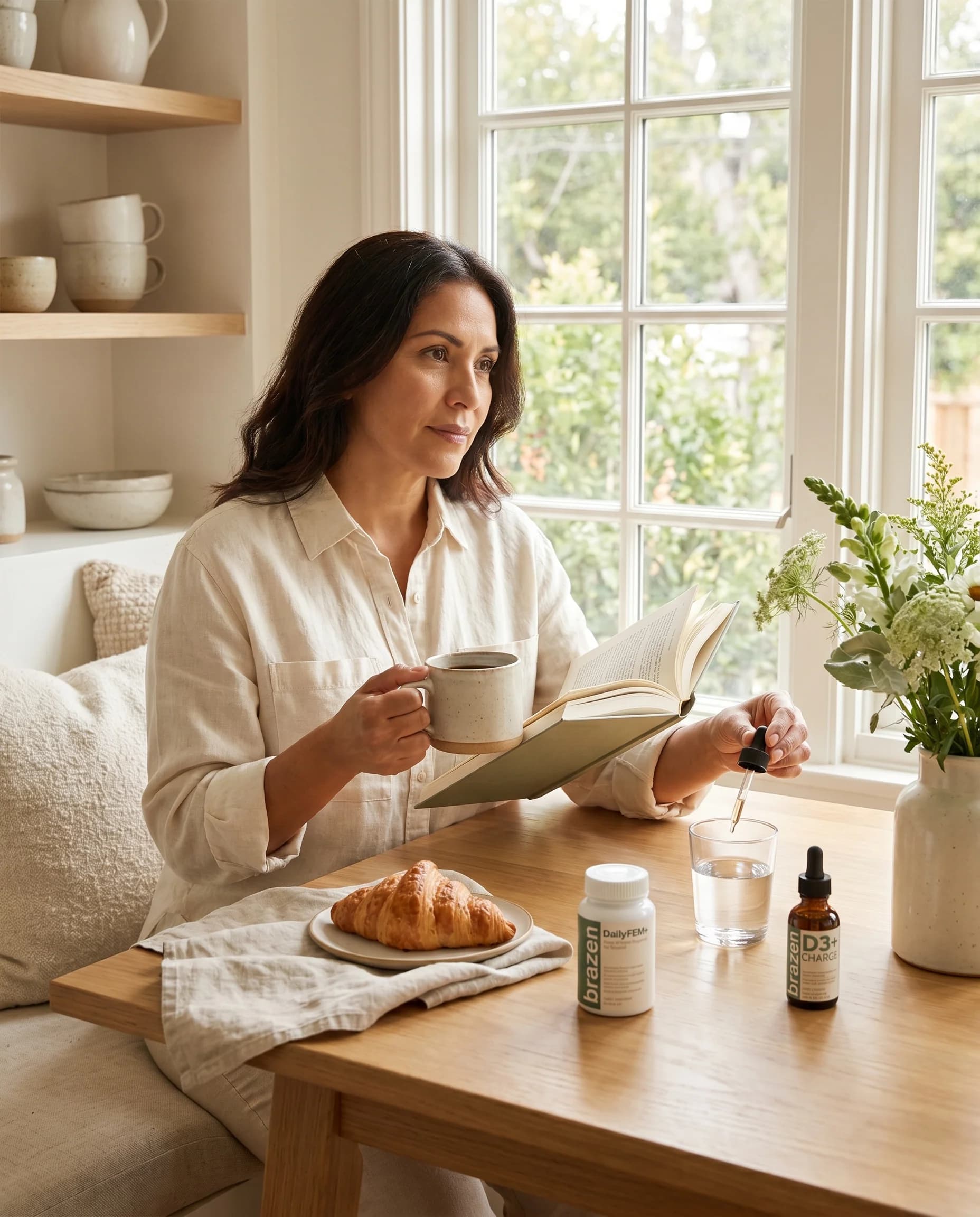
You’ve noticed it. You leave work and it’s already dusky. The kids’ soccer practice ends under the floodlights. Your morning walk now starts in something closer to night than day. And on November 1, the clocks fall back and the sun starts clocking out before you’ve even thought about dinner.
Fall is gorgeous, cozy and full of good soup. It’s also the season when one particular vitamin gets a little harder to come by, because it’s the one your body makes with help from the sun. Let’s talk about vitamin D, why fall changes the picture, and how to keep it simple until spring.
Wait, my skin makes a vitamin?
It does, and it’s one of the cooler party tricks your body has. When a certain kind of ultraviolet light, called UVB, reaches your skin, it kicks off a reaction that produces vitamin D3 (also known as cholecalciferol). Your body then processes it into the form it actually uses.
That’s why vitamin D is sometimes nicknamed “the sunshine vitamin.” It’s also why it behaves differently from most nutrients: for a lot of people, a meaningful share of it has traditionally come from time outdoors rather than from the plate.
Once it’s in your system, vitamin D has a long résumé. One of its best-known jobs is helping your body absorb calcium from food, which is why it comes up so often in conversations about bones.
Why fall changes things
Here’s the catch: not all sunlight is created equal. UVB has to travel through the atmosphere to reach you, and when the sun sits lower in the sky, that light takes a longer, slantier path. More of it gets filtered out along the way.
So as fall turns into winter, three things happen at once:
- The sun sits lower, even at midday, so less UVB reaches the ground.
- Days get shorter, so there’s simply less daylight to work with.
- You move indoors. Cooler weather means more time at your desk, in the car and on the couch, and more of your skin under sweaters and coats.
The farther you live from the equator, the bigger the effect. In much of the northern U.S. and Canada, the winter sun is low enough that your skin makes very little vitamin D from it, no matter how bright and crisp the day looks.
A handy rule of thumb: if your shadow is longer than you are tall, the sun is probably too low for your skin to make much vitamin D.
Go outside at noon this week and check. In a lot of places, you’ll be looking at a pretty long shadow.
It’s not just the season
How much vitamin D your skin makes depends on a whole stack of things besides the calendar:
- Time of day. Midday sun carries more UVB than early morning or late afternoon.
- Cloud cover and air quality. Both can cut down how much UVB gets through.
- Sunscreen and clothing. Both block UVB, which is part of their job. (Please keep wearing sunscreen. Vitamin D isn’t a reason to skip it.)
- Skin tone. More melanin means the skin needs more sun exposure to make the same amount of vitamin D.
- Age. Skin tends to make vitamin D less efficiently as we get older.
- Windows. Glass blocks most UVB, so that sunny spot by the window feels lovely but doesn’t do much on the vitamin D front.
Put it all together and it’s easy to see why so many people think about vitamin D more once the leaves start falling.
Can’t I just eat it?
You can get some, and it’s worth trying. The honest truth, though, is that not many foods naturally contain much vitamin D. The best-known sources:
- Fatty fish, like salmon, trout, sardines and mackerel.
- Egg yolks, in smaller amounts.
- Mushrooms exposed to UV light. Some brands grow or treat them this way and say so on the package.
- Fortified foods, such as milk, many plant milks, some breakfast cereals and some orange juices. Check the Nutrition Facts panel, because fortification varies by product.
A salmon dinner and a fortified latte are great additions to a fall week. For many people, though, food alone doesn’t add up to much, which is where a supplement can come in.
Reading a vitamin D label
If you’re shopping for a vitamin D supplement, here’s what to look for on the Supplement Facts panel.
D3 or D2?
You’ll usually see one of two forms. Vitamin D3 (cholecalciferol) is the form your skin makes. Vitamin D2 (ergocalciferol) comes from plants and fungi. Both are common in supplements; the label will tell you which one you’re getting.
Micrograms and IU
Vitamin D is listed in micrograms (mcg), and many labels also show International Units (IU). The conversion is tidy: 1 mcg equals 40 IU. The Daily Value for adults and children 4 and up is 20 mcg, or 800 IU.
Serving and strength
Formulas range from modest amounts to high-potency servings well above the Daily Value. Because vitamin D is fat-soluble and your body stores it, more isn’t automatically better. The right amount for you depends on your diet, your sun exposure, your health and what your healthcare professional recommends. They can also check your vitamin D level with a simple blood test, which takes the guesswork out completely.
Make it part of your fall routine
Once you and your healthcare professional have settled on an approach, the trick is consistency. A few easy ways to make it stick:
- Take it with a meal. Vitamin D is fat-soluble, so pairing it with food, ideally something with a little fat in it, is a natural fit. Avocado toast counts. So does that croissant.
- Anchor it to breakfast. Put the bottle right next to the coffee maker or the cereal so the morning does the remembering for you.
- Don’t let the time change knock you off. When the clocks fall back, your mornings shift. Keep the habit tied to an activity (“after I pour my coffee”), not a time on the clock.
- Still get outside. Even when the sun isn’t doing much for your vitamin D, daylight, fresh air and a brisk walk are a lovely antidote to a season spent indoors.
A note for families
Kids spend more time indoors in the colder months too, but their needs are different from yours. Supplements for children, and any supplement during pregnancy or while breastfeeding, are a conversation for your pediatrician or healthcare professional. The same goes if you take any medications. Adult-strength formulas are made for adults.
Where Brazen fits
Our D3+ Charge keeps things short: vitamin D3 in an extra virgin olive oil base, with vitamin E as a preservative. Three ingredients, five drops a day under the tongue or in a drink, preferably with food. It’s made to support calcium absorption and bone strength, along with immunity and mood, as part of a daily routine. It’s a high-potency 5,000 IU serving, so check with your healthcare professional that it’s the right fit before you start, then let the breakfast table do the rest until the sun comes back.
This article is for general information and isn’t medical advice. Talk to your healthcare professional before starting any supplement.